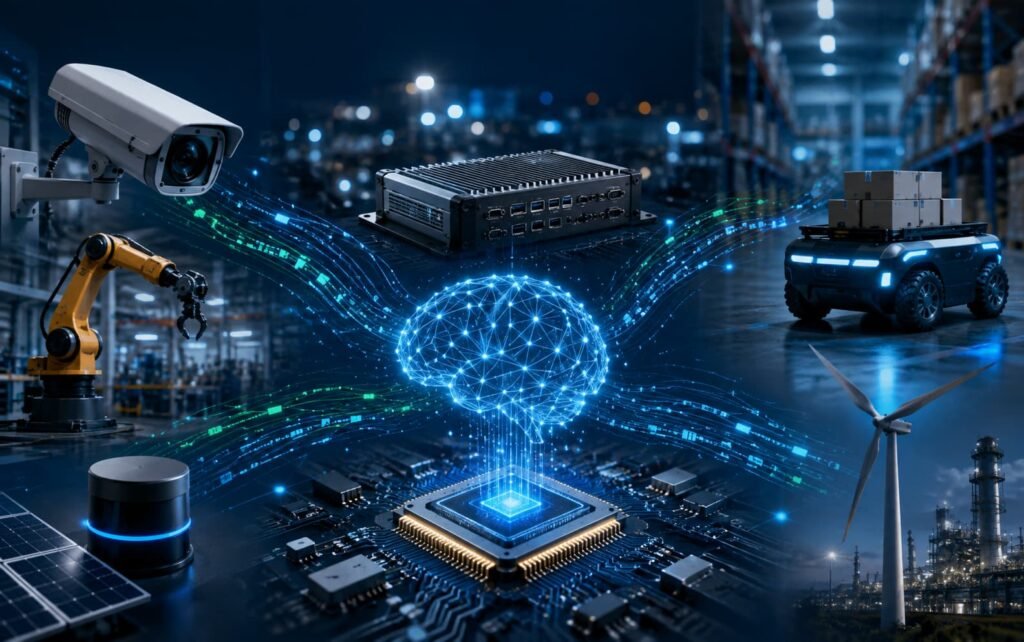
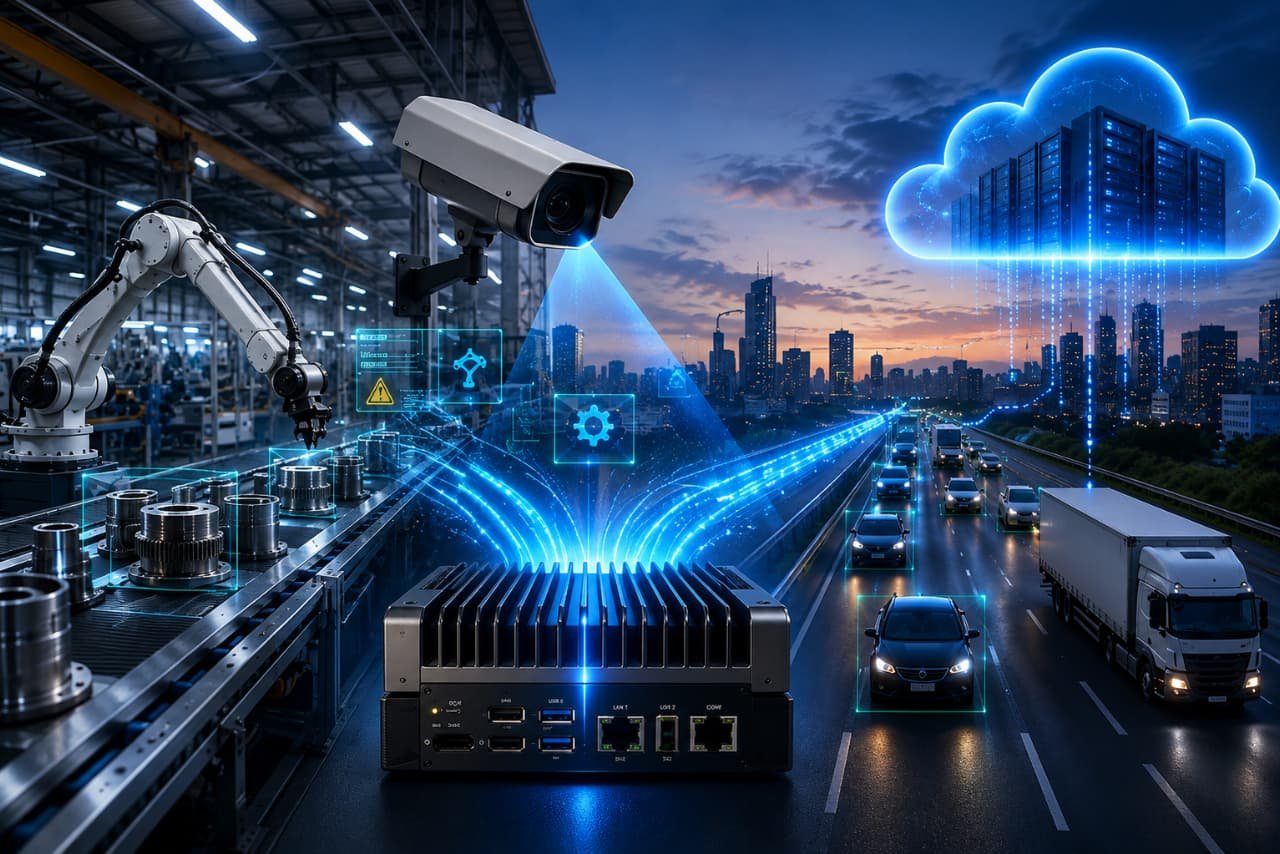
In applications like industrial safety, quality inspection, traffic monitoring, and healthcare, even a small delay in detecting events and making decisions can have real-world consequences. That’s why organizations are moving computer vision closer to where data is created – the edge.

Cloud-first computer vision architectures are reaching practical limits in latency, bandwidth, privacy, and reliability. As a result, organizations are moving AI inference closer to the data source- deploying models directly on edge devices and on-premise systems. This enables real-time decisions, better data control, and lower operational costs, while introducing new deployment and management challenges.
The limits of cloud‐only computer vision
| Challenge | Why It Matters |
|---|---|
| Latency | Network delays impact real-time applications such as industrial safety and robotics. |
| Bandwidth | Streaming video continuously to the cloud for analysis consumes significant network bandwidth. |
| Reliability | AI performance depends on stable internet connectivity, making outages a major risk. |
| Privacy & Compliance | Transmitting raw video to the cloud may violate data protection or regulatory requirements. |
What "Edge" Means for Computer Vision?
Traditional computer vision systems send video to the cloud for AI processing. While effective, this approach can introduce delays, consume significant bandwidth, and rely on stable internet connectivity.
Edge AI changes this approach by moving AI processing closer to where the data is generated. Instead of sending every video frame to the cloud, AI models run directly on edge devices or local servers, enabling faster decisions while reducing bandwidth usage and improving data privacy.
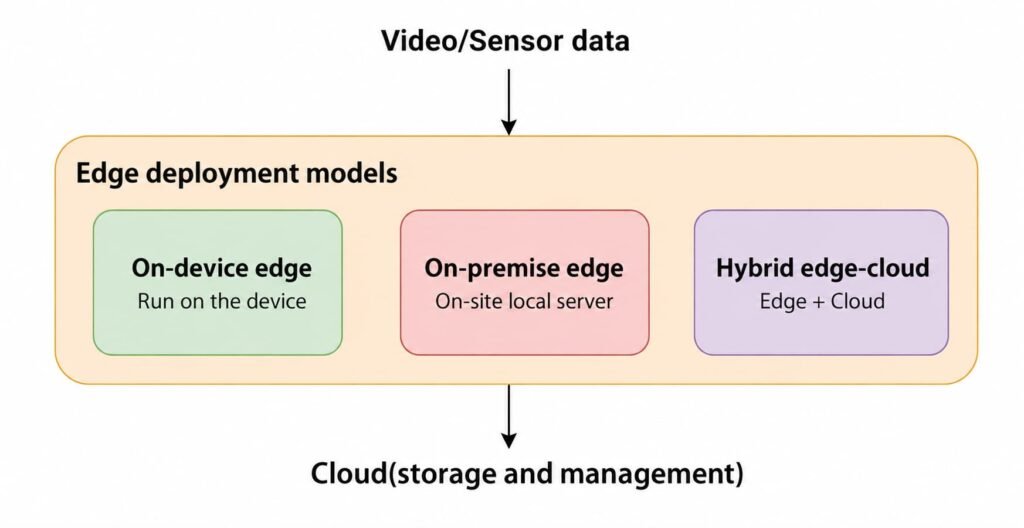
Figure :1 Three Models of edge computer vision deployment
In computer vision, edge refers to running AI closer to where data is generated. It typically falls
into three categories:
- On-device edge: Models run directly on cameras or embedded devices.
- On-premise edge: Local servers process data from multiple cameras within a site.
- Hybrid edge-cloud: The edge handles real-time inference, while the cloud manages storage, analytics, and system management.
Why AI Is Moving to the Edge?
- Lower Latency: Real-time applications such as robotics, industrial automation, and access control require instant decisions. Running AI at the edge eliminates cloud round trips, enabling faster and more predictable responses.
- Better Data Privacy: Processing video locally keeps sensitive data on-site, reducing compliance risks and allowing only relevant events to be sent to the cloud.
- Higher Reliability: Edge AI continues to operate even during network outages, ensuring critical functions remain available with local inference and buffering.
- Lower Bandwidth and Cloud Costs: Instead of streaming all video to the cloud, edge devices process data locally and transmit only important events, significantly reducing
bandwidth usage and cloud infrastructure costs.
Where edge computer vision excels?
5.1 Manufacturing and industrial automation
Factories and production lines often have strict requirements for uptime and safety, but connectivity to the public internet can be constrained or segmented. Edge computer vision is well‐suited to tasks such as defect detection, PPE compliance monitoring, and equipment condition monitoring.
Key advantages:
- On‐line inspection at line speed without sending video off‐site.
- Local integration with PLCs, SCADA systems, or industrial control networks.
- Resilient operation in network‐isolated environments.
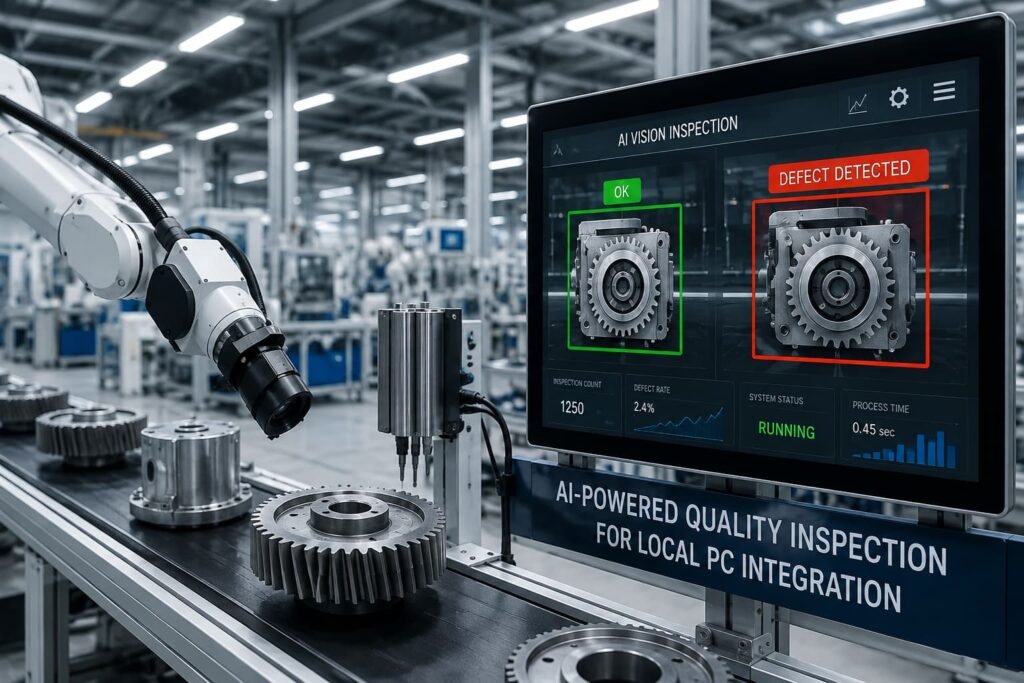
Figure:2 AI-Powered Quality Inspection on the Factory Floor
5.2 Transportation and logistics
Transportation systems use computer vision for traffic analytics, driver monitoring, and cargo tracking. Deploying models at the edge avoids reliance on potentially unreliable or high‐latency connections.
This approach provides:
- On‐device decision‐making for safety‐critical tasks.
- Local buffering with opportunistic sync to central systems.
- Better utilization of bandwidth for state updates instead of raw streams.
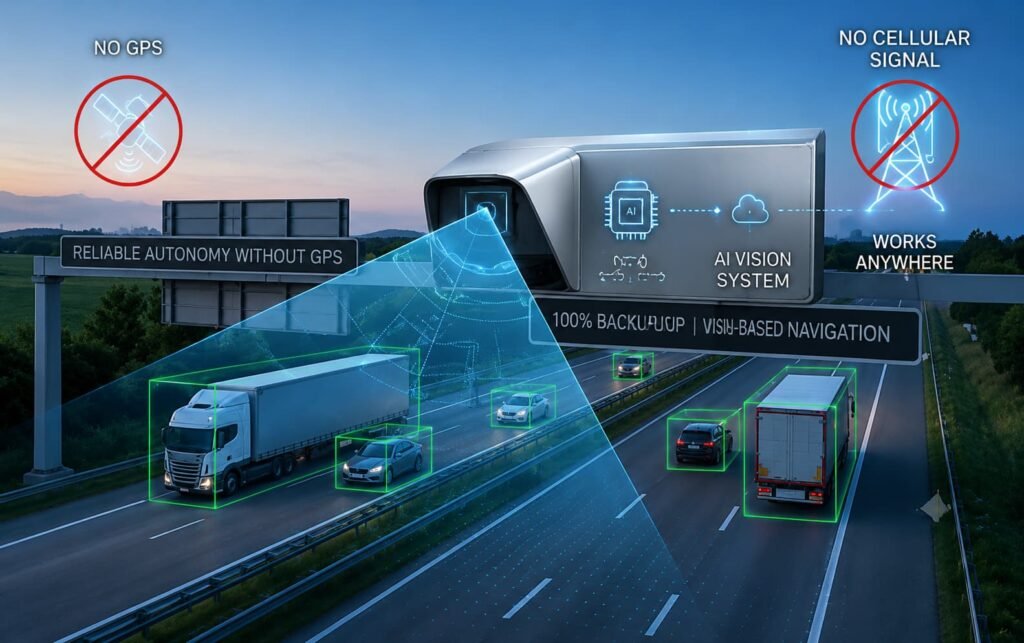
Figure:3 Real-Time Vision Processing for Connected Vehicles
Challenges and trade‐offs
Moving computer vision workloads to the edge is not without friction. Unlike a centralized cloud deployment, edge architectures distribute compute, storage, and security across dozens or hundreds of physical locations – which shifts real operational weight onto the team running it. The three trade-offs that come up most often:
- Operational Complexity – Managing large numbers of edge devices requires centralized monitoring, software updates, and fleet management tools.
- Hardware Constraints – Limited compute, memory, and power require optimized AI models and efficient inference pipelines.
- Security – Distributed deployments require secure boot, encrypted communication, and
authenticated software updates to protect devices.
None of these trade-offs are dealbreakers — they’re solvable with the right approach:
- Operational complexity is managed with fleet orchestration tools (containerized deployments, OTA updates, centralized dashboards) so one team can operate hundreds of edge nodes without manual per-device work.
- Hardware constraints are addressed through model optimization-quantization, pruning, and distillation shrink models to run efficiently on constrained silicon without a major accuracy trade-off.
- Security is handled the same way it is in any distributed system: hardware-backed secure boot, mutual TLS for device-to-cloud communication, and signed model / config updates so a compromised node can’t be used to push malicious code.
Conclusion
Cloud‐only vision struggles with latency, bandwidth, privacy, and reliability at scale. Edge and hybrid architectures deliver real‐time decisions, lower bandwidth and cloud costs, and better data control, but need investment in deployment automation, lifecycle management, and security. Start with focused pilots on high‐impact use cases and build automation early.